Insulated Glass: The Smart Choice for Energy Efficiency and Comfort
Insulated glass, often called double glazing or IGU (Insulated Glass Unit), has become a cornerstone of modern building design.
It offers an effective solution for energy conservation, noise reduction, and indoor comfort.
Made of two or more glass panes separated by a spacer, insulated glass is sealed with an air or gas-filled cavity. This design minimizes heat transfer between a building’s interior and exterior.
The result? Indoor temperatures stay regulated all year round.
This also means less reliance on heating and cooling systems leading to lower energy bills and a smaller carbon footprint.
But energy savings aren’t the only benefit.
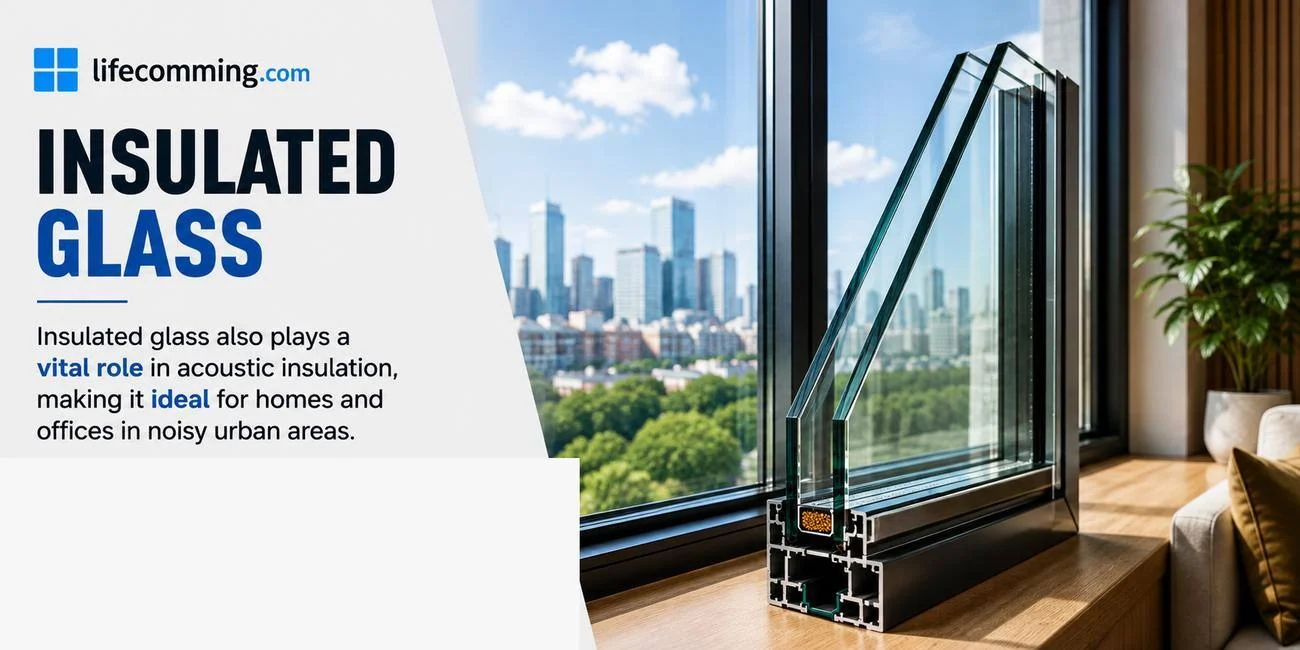
Insulated glass also plays a vital role in acoustic insulation, making it ideal for homes and offices in noisy urban areas.
It even helps prevent condensation buildup, protecting window frames and interiors from moisture damage.
As demand grows for sustainable construction and energy-efficient building codes, insulated glass has become a preferred choice among architects, builders, and homeowners.
It strikes the perfect balance between functionality, durability, and long-term cost savings.
What Is Insulated Glass, Exactly
Insulated glass often called an IGU, short for “insulated glazing unit” is two or more panes of glass sealed together with a gap of air or gas trapped in between.
That trapped gap is the whole point. Air and gas conduct heat far more slowly than glass does. So instead of one solid sheet letting heat pass straight through, you get a buffer zone that slows the transfer down.
Why it matters: A single pane of glass lets heat move through it almost freely. Insulated glass can cut that heat loss by half or more, depending on how many panes and what’s between them.
When you’d use it: Anywhere you want glass that also does the job of a wall new construction, window replacement, storefronts, skylights, patio doors, and even some refrigerator display cases.
How Insulated Glass Actually Works
Picture two panes of glass held apart by a thin metal or composite frame around the edges, called a spacer. That spacer keeps the panes a fixed distance apart usually somewhere between 1/4 inch and 3/4 inch — and creates a sealed pocket of air between them.
Heat moves through glass by conduction. It moves through trapped air far more slowly, mostly by a much weaker process called convection. By putting a “cushion” of air or gas between two panes, you slow down how fast indoor and outdoor temperatures try to equalize through the window.
Three things determine how well an IGU performs:
- The number of panes (double, triple, or more)
- What fills the gap between them (regular air or a heavier gas like argon or krypton)
- Whether the glass has a special coating that reflects heat
We’ll walk through each of those next.
What’s Inside an IGU: Spacers, Gas Fills, and Seals
Most people picture insulated glass as “two pieces of glass with air in the middle.” That’s true, but the parts around the edge matter just as much as the glass itself.
The spacer. This is the frame running around the perimeter between the panes. Older units used solid aluminum spacers, which conduct heat and create a cold edge around the glass. Newer units use “warm-edge” spacers made of foam, silicone, or composite materials that insulate far better and reduce condensation along the edges.
The gas fill. Standard IGUs are filled with regular air. Better ones use argon gas, which is denser and slows heat transfer more effectively. Premium units use krypton, an even denser gas that performs best in narrow gaps where argon loses some of its advantage.
The seal. A dual seal system keeps the gas in and moisture out. The primary seal (usually polypropylene) blocks moisture vapor. The secondary seal (typically silicone or poly sulfide) gives the unit structural strength. When people talk about a window “failing,” they almost always mean this seal has broken down.
Double Pane vs. Triple Pane Insulated Glass
This is the decision most homeowners actually face, so here’s the honest comparison.
| Feature | Double Pane | Triple Pane |
|---|---|---|
| Panes of glass | 2 | 3 |
| Typical U-factor | 0.30–0.25 | 0.20–0.15 |
| Noise reduction | Good | Better |
| Weight | Lighter | 20–30% heavier |
| Cost | Lower | 20–40% more |
| Best climate fit | Mild to moderately cold | Very cold or very hot |
Double pane glass is the standard choice across most of the US, and for good reason it balances cost and performance well in moderate climates. Triple pane earns its extra cost in places with harsh winters, brutal summers, or heavy outdoor noise, like near an airport or busy highway.
A rule of thumb worth remembering: triple pane rarely pays for itself through energy savings alone in mild climates. It’s worth it when comfort and noise control matter as much as the utility bill.
Low-E Coatings: The Invisible Upgrade
low-impassivity (Low-E) coating is a microscopically thin metallic layer applied to the glass, usually facing into the gas-filled gap where it can’t be scratched or worn off.
This coating reflects infrared heat while still letting visible light through. In winter, it bounces indoor heat back into the room. In summer, it reflects the sun’s heat before it ever gets inside.
Why it matters: Without Low-E coating, insulated glass is really just “two panes of glass” doing a mediocre job. With it, the same two panes perform noticeably better often a 30-40% improvement in energy efficiency compared to uncounted glass.
There are two general types worth knowing:
- Passive (hard-coat) Low-E — lets in more solar heat, useful in colder climates where you want the sun’s warmth
- Solar control (soft-coat) Low-E — blocks more solar heat, useful in hot climates where you’re fighting to keep heat out
Almost all quality insulated glass sold today includes some form of Low-E coating. If a quote doesn’t mention it, ask.
Insulated Glass Ratings: U-Factor, R-Value, and shag Explained
Window performance labels look intimidating, but three numbers tell you almost everything you need to know.
- U-factor measures how much heat escapes through the window. Lower is better. Good insulated glass falls between 0.20 and 0.30.
- R-value is the inverse of U-factor and measures resistance to heat flow. Higher is better. You’ll see this term more often in general insulation talk than on window labels.
- shag (Solar Heat Gain Coefficient) measures how much solar heat passes through the glass, on a scale from 0 to 1. Lower shag suits hot climates; higher shag helps in cold climates where you want free solar heat.
Look for the narc (National Fenestration Rating Council) label on any window you’re considering. It’s the standardized sticker that lists these numbers so you can compare products apples-to-apples, regardless of brand.
Benefits of Insulated Glass
Here’s what you actually notice living with it day to day.
- Lower energy bills — less heat escapes in winter and less heat enters in summer, so your h vac system runs less
- More even indoor temperatures — no more cold spot on the couch near the window
- Reduced outside noise — the air or gas gap dampens sound waves along with heat
- Less condensation — the inner pane stays closer to room temperature, so moisture doesn’t collect on the glass
- UV protection — Low-E coatings block a large share of UV rays, which slows fading in carpets, furniture, and artwork
- Higher resale value — energy-efficient windows are a selling point buyers actively look for
Insulated Glass vs. Single Pane vs. Storm Windows
If you’re weighing your options, here’s how the three stack up.
| Option | Insulation Level | Typical Cost | Best For |
|---|---|---|---|
| Single pane | Low | Lowest | Historic preservation, mild climates only |
| Single pane + storm window | Moderate | Low-moderate | Budget upgrade for older homes |
| Insulated glass (double/triple) | High | Moderate-high | Most new construction and full replacements |
Storm windows are worth mentioning because they’re the budget path to something close to insulated glass performance. Adding a storm window over an existing single pane creates a similar air gap effect without replacing the whole window. It’s a smart option for historic homes where you can’t swap out the original glass.
How Long Does Insulated Glass Last
A well-made IGU typically lasts 15 to 25 years before the seal starts to fail. Cheaper units or ones installed in harsh climates may show problems sooner.
Here’s how to spot a failing seal:
- Fog or condensation trapped between the panes that won’t wipe away
- A visible haze or cloudy ring around the edge of the glass
- Reduced clarity that gets worse over time
Once moisture gets past a broken seal, the gas fill has usually escaped too, and the insulating performance drops. At that point, the glass unit needs replacing you generally don’t need to replace the whole window frame, just the IGU itself, which is a meaningfully cheaper fix.
Cost of Insulated Glass Windows
Prices vary widely by region, glass type, and installer, but here’s a realistic range for a standard-size window in the US:
- Double pane, vinyl frame: $300–$700 per window installed
- Double pane with Low-E and argon: $400–$900 per window installed
- Triple pane with Low-E and argon or krypton: $600–$1,200 per window installed
Full-home replacements typically run anywhere from $8,000 to $25,000 depending on house size and glass specification. Many utility companies and some states offer rebates or tax credits for energy-efficient windows, so it’s worth checking local programs before you budget the full cost yourself.
Choosing the Right Insulated Glass for Your Climate
There’s no single “best” insulated glass the right choice depends on where you live.
- Cold climates (Northeast, Upper Midwest): double or triple pane, argon-filled, with a passive Low-E coating that lets in solar heat
- Hot climates (Southwest, Deep South): double pane with solar-control Low-E and a low shag rating to block heat gain
- Mixed climates (Mid-Atlantic, parts of the Midwest): double pane with a balanced Low-E coating designed for both heating and cooling seasons
- Coastal or high-noise areas: triple pane or laminated insulated glass for extra sound dampening, regardless of temperature concerns
If you’re not sure which category fits your area, the Department of Energy’s climate zone map, paired with the narc label on any window you’re shopping for, will tell you exactly what U-factor and shag range to target.
Installation and Maintenance Tips
Insulated glass performs best when it’s installed correctly and cared for with basic upkeep.
- Have windows installed by someone experienced with the specific frame material poor installation is the leading cause of early seal failure, not the glass itself
- Clean glass with a mild soap and water solution; avoid ammonia-based cleaners on Low-E coatings
- Check weatherstripping and caulking around frames yearly, since air leaks around the window matter as much as the glass performance
- Don’t block warm-edge spacer areas with heavy curtains pressed tight against the glass, which can trap moisture
FAQs:
Is insulated glass the same as double-pane glass?
Not exactly. Double pane is one type of insulated glass. Insulated glass is the broader category that includes double, triple, and even quadruple pane units.
Does insulated glass actually reduce noise?
Yes. The trapped air or gas gap dampens sound waves in addition to heat, though laminated glass with an added plastic interlayer reduces noise even more than a standard IGU.
Can you repair foggy insulated glass, or do you have to replace it?
Once moisture gets inside the sealed unit, it can’t be fully cleared or repaired. The glass unit needs replacement, though the surrounding window frame usually doesn’t.
Is triple pane worth the extra cost?
It depends on your climate and priorities. In very cold or very hot regions, or in noisy areas, triple pane earns its keep. In mild climates, double pane with good Low-E coating often delivers similar comfort for less money.
What’s the difference between argon and krypton gas fills?
Argon is more common and more affordable, and it performs well in standard gap widths. Krypton is denser and insulates better in narrow gaps, which makes it common in triple-pane units where space between panes is tighter.
How do I know if my current windows are insulated glass?
Check the edge of the glass for a spacer bar between two visible panes. If you see only one continuous pane of glass with no gap, it’s single pane.
Final Thoughts:
Insulated glass isn’t a luxury upgrade anymore it’s the baseline for any home or building that wants to control energy costs and stay comfortable year-round.
The right combination of panes, gas fill, and coating depends entirely on your climate and budget, but the payoff is the same everywhere: lower bills, quieter rooms, and windows that actually do their job.
About the Author



1 thought on “180+ Insulated Glass A Complete Guide to How It Works”