Glass Bricks: What They Are, Where They Work, and How to Use Them
Glass bricks let light in and keep prying eyes out.
They are durable, stylish, and surprisingly versatile.
You can use them in a shower wall, a basement window, or a bold interior partition.
They look like thick, hollow glass bricks.
But they behave like a clever building system.
They brighten dark rooms, add privacy, and give your space a timeless, architectural look.
This guide explains how they work and which type fits your project.
It also covers cost, installation, and care.
What Are Glass Bricks?
Glass bricks are hollow glass units. People also call them glass blocks.
Makers press two glass halves together while the glass is hot. As the halves cool, they fuse into one sealed unit. The sealed center holds dry air at low pressure.
That sealed air is why glass bricks do more than pass light. It helps them insulate better than a single pane of glass.
Quick answer: Glass bricks are sealed, hollow glass units. Builders stack them in mortar or set them in a grid system. They make light-filled walls, windows, and partitions.
Glass Brick vs. Glass Block: Is There a Difference?
No. The two terms mean the same thing.
- “Glass block” is the common trade term.
- “Glass brick” is what many homeowners search for.
- Both describe the same product.
Why Glass Bricks Still Matter Today
Glass bricks first became popular in the early 1900s. Architects loved them for factories and offices. Later, they showed up in Art Deco and mid-century homes.
Today, they are back in style. Designers use them for a few reasons:
- Open floor plans need light, but rooms still need privacy.
- Small spaces feel bigger when light passes through walls.
- Retro and industrial looks are popular again.
- Homeowners want a low-maintenance material that lasts.
How Glass Bricks Work
A glass brick does three jobs at once.
- It transmits light. Most designs let in daylight but blur the view.
- It slows heat flow. The sealed air space acts as a buffer.
- It blocks some noise. The thick glass and air gap dampen sound.
Performance varies by product. Some blocks have a fiberglass insert inside. That insert can improve insulation and reduce glare. Always check the maker’s data sheet for exact numbers.
Glass Brick Sizes and Thickness
Most blocks come in square and rectangular sizes. Sizes are called “nominal.” The real block is a little smaller. The gap is made up by the mortar joint.
| Nominal Size | Common Use |
|---|---|
| 6 x 6 in. | Small windows, accents, curves |
| 8 x 8 in. | The most popular size, for walls and windows |
| 12 x 12 in. | Large walls, fewer joints, a modern look |
| 4 x 8 in. | Slim accents and decorative bands |
Most standard blocks are about 3⅛ to 3⅞ inches thick. Thin-line versions are slimmer. They work in light-duty interior spots.
Pro tip: Fewer joints make a cleaner look. Larger blocks mean fewer lines, and that suits modern design.
Types of Glass Bricks
Not all glass bricks look the same. Pick the style based on privacy, light, and mood.
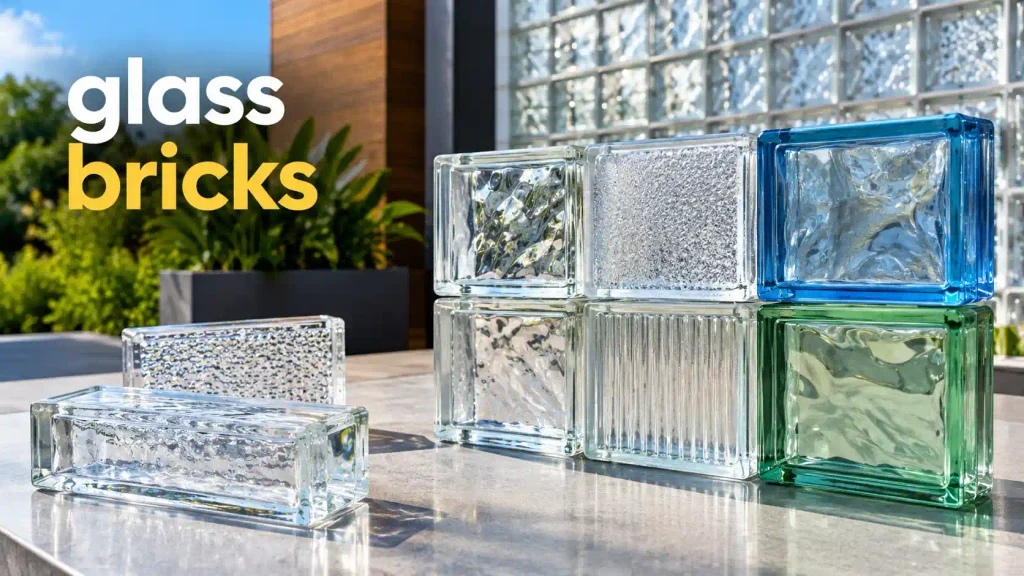
By Surface Pattern
- Clear or smooth: Maximum light, with some distortion.
- Wave or ripple: Soft, flowing lines. Good for baths.
- Frosted or satin: Strong privacy with a calm glow.
- Cloudy or pattern-cut: Heavy privacy. Great for street-facing walls.
By Color
- Clear: The classic look.
- Tinted: Blue, green, amber, and other colors. They add mood and cut glare.
- Painted or coated: Custom shades for design-led projects.
By Performance
- Standard blocks: For most home projects.
- Impact-rated blocks: Built for storm-prone areas.
- Fire-rated blocks: Used in special assemblies, with listed ratings.
- Ventilating units: A block with a built-in vent, often used in basements.
Fire-rated and impact-rated blocks only work as part of tested systems. A DIY standard wall will not earn those ratings.
Where to Use Glass Bricks
Here are the best real-world spots, and why each works.
Bathrooms and Showers
A glass brick wall can replace a shower door. Light flows in, but the view stays soft. There is no hinge or frame to clean.
Need privacy while singing in the shower? Glass bricks have you covered. 🚿🎤😜
Basement Windows
Old basement windows leak, rust, and rot. Glass block replaces them with a solid, secure unit. It adds light and helps deter break-ins.
Safety note: A fixed glass block window is not an emergency exit. If the room needs an egress window, choose a code-compliant window instead.
Interior Partitions
Use a glass brick wall to split a room without making it feel closed in. It works well in:
- Entryways
- Home offices
- Stair walls
- Kitchen dividers
Exterior Walls and Facades
Glass bricks let daylight into garages, stairwells, and storefronts. Their weight and thickness also give a more solid look than plain glass.
Garden and Patio Features
Short glass brick walls work as privacy screens. At night, they glow when lit from behind.
Benefits of Glass Bricks
- Natural light without full exposure. Privacy and brightness in one product.
- Strong and long-lasting. Glass does not rot, rust, or warp.
- Easy to clean. Wipe the surface and you are done.
- Better sound control. Good for busy streets and shared walls.
- Distinct style. Few materials look like glass block.
Limits to Know Before You Buy
Honest drawbacks matter, too.
- Weight. Walls are heavy and need solid support.
- Cost. Labor can cost more than the blocks.
- Distorted views. You cannot see clearly through them.
- Not for every load. Standard glass block walls are non-load-bearing.
- Panel size limits. Local codes and makers set the maximum panel size.
Glass Bricks vs. Other Options
| Option | Light | Privacy | Insulation | Upkeep |
|---|---|---|---|---|
| Glass bricks | High | High | Good | Low |
| Clear glass | Very high | Low | Fair | Medium |
| Frosted glass | High | Medium–High | Fair | Medium |
| Acrylic blocks | High | High | Fair | Scratch-prone |
| Standard wall | None | Total | Varies | Low |
Acrylic blocks cost less and weigh less. But they scratch easily and can yellow over time. Glass holds its clarity far longer.
How Much Do Glass Bricks Cost?
Prices change by region, style, and project size. Use these as rough guides.
- Standard blocks: Often a few dollars to roughly $15 each.
- Specialty blocks: Colored, patterned, or rated blocks cost more.
- Installed walls and windows: Often priced by square foot. Labor is a large part of the bill.
What drives cost up:
- Curved or custom layouts
- Hard-to-reach job sites
- Impact- or fire-rated systems
- Removing an old window first
Get at least three local quotes before you commit.
How Glass Bricks Are Installed
Most walls use mortar. Some use a dry-stack or silicone system.
The Basic Mortar Method
- Prep the opening. It must be clean, level, and strong enough to carry the load.
- Add expansion strips. Place them at the sides and top. They let the wall move slightly.
- Mix mortar made for glass block. Type S mortar is common. Follow the maker’s advice.
- Lay blocks in even rows. Use spacers to keep joints uniform.
- Add reinforcement. Metal ties or wire go in the joints as directed.
- Tool the joints. Smooth them, then wipe the glass before the mortar cures.
- Grout and seal. Finish the edges with sealant.
DIY or Pro?
A small, simple window can be a weekend DIY job. A shower wall, a large partition, or any rated wall needs a pro.
Mistakes get expensive fast. Mortar cures quickly, and uneven rows are hard to fix.
Always check: Local building codes, permit rules, and the manufacturer’s size limits.
How to Clean and Care for Glass Bricks
Care is simple.
- Wipe with warm water and mild soap.
- Use a soft cloth or sponge.
- Skip abrasive pads. They scratch the glass.
- Rinse well to prevent streaks.
- Check the joints once a year for cracks or gaps.
- Reseal grout when it looks worn.
In showers, dry the surface now and then. That helps stop soap scum and mineral spots.
Design Ideas That Work
- Curved walls. Smaller blocks bend into smooth arcs.
- Mixed patterns. Combine clear and frosted blocks in a grid.
- Accent bands. Run a strip of blocks across a plain wall.
- Backlit walls. Add LEDs for a night-time glow.
- Window-to-wall blends. Pair block panels with clear glass.
FAQs:
Are glass bricks load-bearing?
Standard glass bricks are not load-bearing. They support their own weight, not the structure above. The frame around them must carry the load.
Are glass bricks waterproof?
The glass and the sealed unit are waterproof. Leaks come from poor joints or sealant. Good installation keeps water out.
Are glass bricks energy efficient?
They insulate better than single-pane glass. They are not as efficient as a modern double- or triple-pane window. Results depend on the product.
Can you see through glass bricks?
Not clearly. You see light, shapes, and color. That is why they are popular for privacy.
Are glass bricks safe?
They are thick and strong. They resist break-ins better than ordinary glass. They are not unbreakable, though.
How long do glass bricks last?
Properly installed glass blocks can last for decades. The glass itself rarely fails. The joints are what need upkeep.
Can glass bricks be used outdoors?
Yes. Use blocks and mortar suited to exterior use. Make sure the system manages water and movement properly.
Do glass bricks go out of style?
They have cycled in and out of fashion for a century. Today, they fit both modern and vintage looks.
Can I cut glass bricks?
No. Cutting breaks the sealed unit. Plan your layout around full blocks, or use special shapes made for ends and corners.
Final Thoughts:
Glass bricks solve a classic design problem. They bring in light, add privacy, and last for years. They work in showers, basements, offices, and entryways.
Success starts with the right plan. Choose the correct block type and size. Respect weight and code limits. Hire a pro for anything complex.
About the Author


1 thought on “Glass Bricks Unlocked: Proven Tips, Smart Costs & Expert Install Advice”