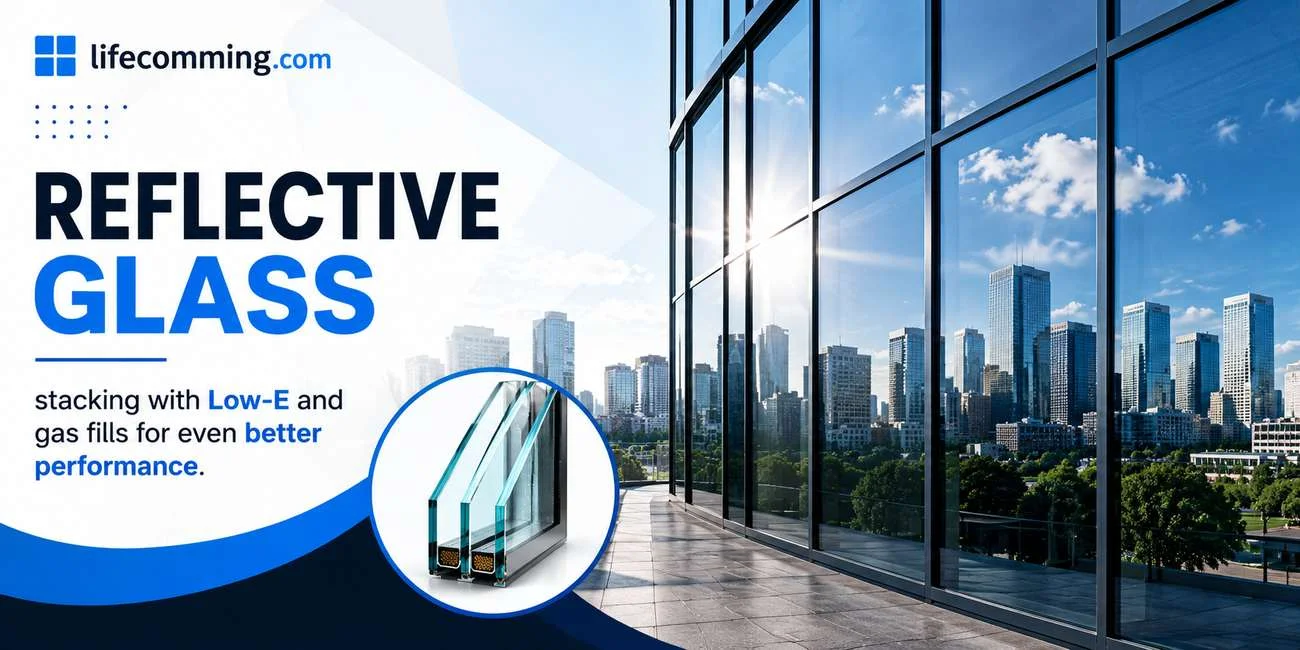
Reflective Glass: Style, Efficiency, and Privacy Combined
Reflective glass, also known as solar control glass, has become a popular choice in both residential and commercial architecture.
It features a thin metallic or metal oxide coating applied to one surface.
This gives it a distinctive, mirror-like appearance.
But this coating doesn’t just look good it reflects a significant portion of solar radiation away from the building.
The result? Reduced heat gain, lower cooling costs, and a more comfortable indoor environment, especially in sunny or warm climates.
Reflective glass is also valued for its ability to minimize glare.
This makes it a smart option for offices, storefronts, and high-rise buildings with large glass facades.
Beyond energy efficiency, it offers an added layer of privacy during daylight hours.
The reflective surface makes it harder to see indoors from outside.
Architects and designers often choose reflective glass for its sleek, modern aesthetic.
It adds a polished, professional look to any structure.
With rising demand for energy-efficient and visually striking building materials, reflective glass continues to be a preferred solution across the construction and design industry.
It combines functionality, style, and performance making it a smart investment for any building project.
What Is Reflective Glass
Mirror Glass is ordinary glass that’s been treated with a thin metallic or metal-oxide coating. That coating bounces back a portion of the light and heat that hits it instead of letting it pass through.
The result is glass with a mirror-like sheen. Depending on the coating, it can look silver, bronze, blue, gold, or even a soft graphite gray.
Manufacturers make it one of two ways:
- Pyrolytic (hard-coat) process — the coating is fused onto the glass while it’s still hot during manufacturing, creating a durable, scratch-resistant surface baked right into the glass.
- magnet sputtering (soft-coat) process — a metal layer is applied to finished glass in a vacuum chamber at room temperature. This method allows for more precise, multi-layer coatings but produces a softer surface that usually needs to be sealed inside an insulated glass unit (IGU) to protect it.
Both methods do the same basic job: turn a clear pane into a partial mirror that manages light, heat, and visibility all at once.
How Reflective Glass Actually Works
Here’s the simple version. Sunlight carries visible light, heat (infrared), and UV rays. A normal window lets most of that straight through.
A reflective coating acts like a selective gatekeeper. The metal particles in the coating reflect a chunk of that incoming light and heat back outside before it ever reaches your room. Less heat in means your air conditioner runs less. Less glare means you’re not squinting at your monitor by 3 p.m.
The one-way mirror effect people notice where you can’t see in during the day but people inside can see out happens because of a light-level difference, not magic. When it’s brighter outside than inside, the glass reflects the bright side back at viewers and only lets a fraction of light through from the darker side. Flip the light levels at night, and the effect reverses: people outside can suddenly see right in unless you add a blind or curtain.
Types of Reflective Glass
Not all looks or performs the same way. Here’s how the main categories break down.
- Single-silver — one thin metallic layer, moderate glare and heat reduction, the most affordable reflective option.
- Double-silver (or triple-silver) — multiple metallic layers stacked for much higher solar control and better clarity, common in high-performance commercial buildings.
- Tinted reflective glass — a color additive (bronze, blue, green, gray) is mixed into the glass itself, then coated, giving both tint and reflectivity.
- Low-E reflective glass — combines a low-impassivity coating (which manages indoor heat) with reflective properties, popular for homes in hot or mixed climates.
- One-way mirror glass — a lighter reflective coating tuned specifically for the day-privacy effect, often used in interior office partitions, atoms, and observation rooms.
- Reflective laminated glass — a reflective coating paired with a laminated safety interlayer, used where security or hurricane resistance matters alongside solar control.
- I don’t need a mirror to check my looks I just walk past reflective glass and let the building admire me!” 😎🪟😂
Reflective Glass vs. Tinted Glass vs. Low-E Glass
People mix these terms up constantly, so here’s a straight comparison.
| Feature | Reflective Glass | Tinted Glass | Low-E Glass |
|---|---|---|---|
| How it works | Metal coating bounces light and heat back | Color added throughout the glass absorbs light | Microscopic coating reflects infrared heat only |
| Visual effect | Mirror-like, can obscure interior view | Darkened but still transparent | Nearly clear, slight tint at most |
| Best for | Glare control, privacy, hot climates | Basic sun and glare reduction | Year-round energy efficiency, cold and hot climates |
| Heat blocked | High | Moderate (absorbs then re-radiates some heat) | High, without darkening the view |
| Common use | Office towers, storefronts, privacy windows | Car windows, budget commercial glazing | Residential windows, energy-code projects |
If your main goal is privacy or a striking exterior look, go reflective. If you mainly want a clear, energy-efficient window that doesn’t change how the glass looks, Low-E alone is usually the better fit. Many modern buildings actually combine both.
Benefits of Reflective Glass
- Cuts cooling costs by blocking a large share of solar heat before it enters the building.
- Reduces glare for people working near windows or driving past glass storefronts.
- Adds daytime privacy without blinds, film, or curtains.
- Gives buildings a distinct, modern look reflective facades are a signature feature of contemporary architecture.
- Blocks a portion of UV rays, which helps protect furniture, flooring, and artwork from fading.
- Works well in insulated glass units, stacking with Low-E and gas fills for even better performance.
Drawbacks and Limitations to Know Before You Buy
Reflective glass isn’t the right call for every situation. Be aware of these trade-offs.
- Loses its privacy advantage at night. Once the interior is brighter than the outdoors, the mirror effect flips and people outside can see in.
- Can create glare problems for neighbors. Some cities have restricted highly reflective facades because the bounced sunlight blinded drivers or heated nearby buildings.
- Bird collisions are a real concern. Birds don’t recognize reflected sky and trees as glass, so reflective facades near green spaces sometimes need bird-safe glass patterns or films.
- Darkens interior daylight. Highly reflective coatings cut down how much natural light reaches inside, which can mean more artificial lighting during the day.
- Costs more than plain glass, especially multi-layer or laminated versions.
- Softer coatings need protection. Sputter-coated reflective glass usually has to stay sealed inside an IGU, since exposure to moisture can degrade the coating over time.
Specialized Uses: Vehicles and Solar Panels
- Commercial office towers and skyscrapers — for both the iconic mirrored look and serious energy savings on large glazed surfaces.
- Retail storefronts — reflective glass lets shoppers glance in during bright hours while keeping window displays from washing out in direct sun.
- Homes in hot or sunny climates — reflective or Low-E-reflective windows on the south and west sides cut down on afternoon heat gain.
- Bathroom and bedroom privacy windows — a lighter reflective coating keeps the room private during the day without blocking the view out.
- Vehicles — reflective and tinted window films on cars and buses reduce cabin heat and glare.
- Interior partitions and observation rooms — one-way mirror glass separates spaces while allowing controlled viewing, common in labs, security rooms, and studios.
- Solar panels and greenhouses — specialized reflective coatings help direct or manage light in agricultural and energy applications.
How Much Does Reflective Glass Cost in 2026
Pricing depends heavily on the base glass type, coating quality, thickness, and whether you’re buying material only or a full installed system. Here’s a realistic range based on current market data.
- Reflective coating on standard float glass: roughly $4 to $10 per square foot added on top of base glass cost, depending on the film or integral tint used.
- Reflective film applied to existing windows: ceramic or dual-reflective films typically run $6 to $12 per square foot installed, a popular budget-friendly retrofit option.
- Reflective coating on tempered or toughened glass: noticeably higher than annealed glass, since it starts from a pricier base material before the coating is added.
- Full insulated glass units (IGUs) with reflective and Low-E coatings: commonly $28 to $65 per square foot installed for commercial-grade projects, with large multi-opening jobs running into the thousands overall.
- Reflective mirror-finish glass panels (for interiors like feature walls): often land between $10 and $40 per square foot for standard thickness, climbing to $40 to $100 per square foot for heavier, premium finishes.
A few things push the price up fast: multi-layer (double or triple-silver) coatings, tempering or laminating the glass, custom tinting, and installation in hard-to-reach commercial facades. Getting an itemized quote — glass cost, coating cost, fabrication, and labor listed separately — is the best way to compare bids apples to apples.
How to Choose the Right Reflective Glass
Match the glass to your actual problem, not just the look you like.
- Chasing energy savings first? Look for reflective glass paired with a Low-E coating and check the solar heat gain coefficient (shag) — lower numbers mean less heat gets through.
- Privacy is the main goal? A single-silver or one-way mirror coating is usually enough, and it costs less than heavy multi-layer options.
- Want a bold architectural statement? Double or triple-silver reflective glass in a tinted color gives the strongest mirror effect and the most dramatic look.
- Building near a park, lake, or migration route? Ask about bird-safe patterns or lower-reflectivity options to reduce collision risk.
- Retrofitting existing windows on a budget? Reflective window film is far cheaper than replacing the glass and can be removed later if you change your mind.
- Living somewhere with cold winters too? Don’t rely on reflectivity alone pair it with a Low-E coating so you’re not losing indoor heat through the glass in January.
Installation and Maintenance Tips
- Clean reflective glass with a soft cloth and a mild, ammonia-free cleaner. Harsh chemicals and abrasive pads can scratch or dull the coating over time.
- Avoid direct pressure-washing on soft-coat (sputtered) reflective glass. It’s more delicate than hard-coat glass and can be damaged by aggressive cleaning.
- Inspect seals on IGUs periodically. If moisture gets between the panes, the coating can fog or degrade, and the unit typically needs to be replaced rather than repaired.
- Have facade-mounted reflective glass inspected after severe storms, especially on multi-story buildings, to check for seal failures or coating damage.
- If installing film retrofits, hire an experienced installer. Bubbles, peeling edges, and uneven tint are almost always installation errors, not product defects.
FAQs:
Does reflective glass block all UV rays?
No. Reflective glass blocks a meaningful portion of UV light, but not all of it. For maximum UV protection, pair reflective glass with a laminated interlayer, which blocks close to the full UV spectrum.
Can you see through reflective glass at night?
Yes, from the outside looking in. The privacy effect depends on which side has more light. At night, most rooms are brighter than the darkness outside, so the mirror effect reverses and people outside can see in unless you add window coverings.
Is reflective glass the same as one-way mirror glass?
They work on the same principle, but one-way mirror glass usually uses a lighter, more specific coating tuned for close-range viewing, like in interview rooms. Architectural reflective glass is designed more for solar control at a distance.
Does reflective glass reduce heat inside a house?
Yes. By reflecting a portion of solar radiation before it enters, reflective glass can noticeably lower indoor temperatures near windows, especially on south- and west-facing walls that get direct afternoon sun.
Is reflective glass more expensive than tinted glass?
Generally, yes. Reflective coatings, especially multi-layer versions, tend to cost more per square foot than a basic tint, though the exact gap depends on the specific products being compared.
Can reflective glass be added to existing windows?
Yes, through reflective window film, which is one of the most affordable ways to add reflectivity and heat control without replacing the glass itself.
Why do some cities restrict reflective glass on buildings?
Highly reflective facades can bounce concentrated sunlight onto streets, neighboring buildings, or drivers, creating glare and, in rare extreme cases, heat damage to nearby property. Some municipalities cap how reflective new construction glass can be for this reason.
Final Thoughts:
Reflective glass earns its spot on modern buildings and homes because it solves three problems at once: heat, glare, and privacy.
But “reflective” covers a wide range of products, from a $6 window film to a triple-silver architectural glazing system costing tens of thousands installed.
The smartest move is to start with your actual problem too much heat, not enough privacy, or wanting a specific look then work backward to the coating and glass type that solves it.
Get quotes broken down by glass, coating, and labor, and don’t assume the most reflective option is automatically the best one for your space.
About the Author


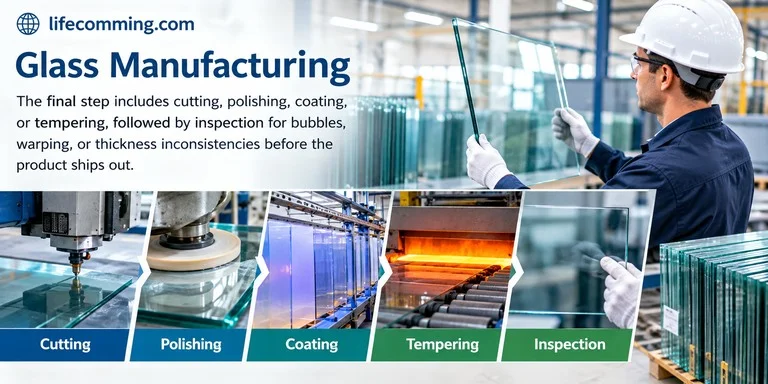
3 thoughts on “300+ Reflective Glass Types, Benefits, Costs & How It Works”