Crystal glass isn’t just glass with a fancier name.
It’s a distinct category of glassware. Made by adding metal oxides like lead, barium, or zinc to the raw silica mix.
That small change makes a big difference. Crystal feels heavier in your hand. It rings when you tap it. And it throws tiny rainbows across the table under bright light.
Whether you’re eyeing a set of wine glasses, a whiskey decanter, or an heirloom bowl passed down from a relative this guide has you covered.
You’ll learn what makes crystal glass different from regular glass. How to shop smarter. How to spot genuine quality. And how to care for it, so it lasts for decades.
What Is Crystal Glass
Crystal glass is glass made with added metal oxides historically lead oxide, now often barium, zinc, or potassium oxide that change how the glass bends light, feels in your hand, and sounds when struck.
It isn’t a mineral. It isn’t “real crystal” in the geological sense, like quartz. The name is a holdover from centuries ago, when the clarity of fine glass reminded people of natural rock crystal. The term stuck, and today “crystal” is a glass making category, not a gemstone claim.
Why it matters: Knowing this saves you from a common myth that crystal is somehow “grown” or mined. It’s manufactured, and the quality depends entirely on the recipe and craftsmanship behind it.
Crystal Glass vs. Regular Glass: What Actually Changes
Regular soda-lime glass the stuff in your everyday drinking glasses is made from silica, soda ash, and lime. It’s cheap to produce, durable, and dishwasher-friendly. Crystal swaps some of that recipe for metal oxides, and that swap changes three things you can actually notice:
- Weight — Crystal feels heavier for its size because the added oxides increase density.
- Clarity — Crystal bends light more sharply, which is why cut crystal throws those tiny rainbows across a table.
- Sound — Tap crystal with a fingernail and it rings; tap regular glass and it thuds. The oxide content changes how vibrations travel through the material.
There’s a softness trade-off, too. Crystal is more porous and easier to scratch or chip than tempered soda-lime glass, which is exactly why crystal stemware usually gets hand-washed while your everyday glasses go straight in the dishwasher.
Lead Crystal vs. Lead-Free Crystal
For most of the 20th century, “crystal” meant lead crystal glass with at least 24% lead oxide by weight, sometimes called full lead crystal. Lead is what gave old-world crystal its signature weight and brilliance.
That’s changed. Health concerns about lead leaching into food and drink plus tightening regulations in the EU and parts of the US pushed manufacturers toward alternatives.
- Lead crystal — Brightest sparkle, heaviest feel, softest to cut and engrave. Best reserved for display pieces or decanters you don’t use daily, since lead can leach into acidic liquids like wine over time.
- Lead-free crystal (barium, zinc, or potassium oxide-based) — Slightly less brilliance than full lead crystal, but food-safe for everyday use and increasingly the industry standard.
- Crystalline/crystal-clear glass — A marketing term for high-clarity glass with little or no metal oxide content. It looks similar to crystal but doesn’t perform the same way and costs less.
When it matters: If you’re buying stemware you’ll actually drink from regularly, lead-free crystal is the practical choice. If you’re buying a decorative bowl or a decanter for display, lead crystal’s extra sparkle is fair game.
How Crystal Glass Is Made
Understanding the process explains why handmade crystal costs more than machine-pressed crystal and why that price gap is often justified.
- Batching — Raw materials (silica, metal oxides, stabilizers) are weighed and mixed to an exact formula. Small variations here change clarity and durability.
- Melting — The batch is heated to roughly 2,400°F (1,300°C) in a furnace until it becomes molten glass.
- Shaping — Glassblowers gather molten glass on a blowpipe and shape it by hand, or the glass is pressed into a mold for consistent, faster production.
- Cutting and engraving — Skilled cutters grind facets into the surface using rotating wheels, which is what creates the sparkle and light-catching patterns on classic crystal pieces.
- Polishing — Pieces are polished, often with acid baths, to smooth cut edges and maximize clarity.
- Annealing — Finished pieces cool slowly in a controlled oven to relieve internal stress and prevent cracking.
Hand-blown, hand-cut crystal from a workshop can take a single artisan hours to finish one piece. That’s the difference between a $15 pressed-glass tumbler and a $150 hand-cut crystal one it’s not just branding.
How to Tell If Glass Is Real Crystal
You don’t need lab equipment to check. Try these before you buy, especially at estate sales, thrift stores, or from private sellers where labels are missing.
- The ring test — Flick the rim gently with a fingernail. Real crystal produces a clear, sustained ringing tone. Regular glass gives a flat, short thud.
- The weight test — Hold two similarly sized pieces side by side. Crystal feels noticeably heavier due to its denser composition.
- The refraction test — Hold the piece under a bright light or near a window. Crystal splits light into visible color flashes; plain glass stays mostly clear without that rainbow effect.
- The facet-edge test — Run a finger lightly over cut edges. Crystal facets feel sharp and precise; molded imitation glass often has softer, rounder edges from the casting process.
- Check the base — Many genuine crystal pieces are etched with a maker’s mark (Waterford, Baccarat, Riedel, and others often sign their work faintly on the base or foot).
No single test is proof on its own chip a piece slightly, or use two pieces from different manufacturers, and results can vary. Run two or three of these checks together for a confident read.
Common Types of Crystal Glassware
Crystal shows up in more places than the china cabinet. Here’s where you’ll actually encounter it:
- Stemware — Wine glasses, champagne flutes, and cocktail glasses, where thin crystal walls are prized for how they affect aroma and taste perception.
- bar ware — Whiskey tumblers, decanters, and ice buckets, often cut with deep facets for a heavier, more substantial feel.
- Tableware — Bowls, vases, and candlesticks, where crystal’s clarity and light-catching quality serve a decorative purpose.
- Chandeliers and lighting — Cut crystal prisms and beads that scatter light, a use case dating back to 18th-century European glass making.
- Collectibles and art glass — Figurines, paperweights, and limited-edition pieces valued for craftsmanship rather than daily use.
Practical tip: If you’re buying your first set of crystal, start with stemware. It’s the most functional entry point and the easiest way to feel the difference crystal makes versus regular glass — thinner walls, a livelier ring, and a noticeably different feel against your lips when drinking wine.
Does Crystal Glass Actually Change How Drinks Taste
This gets debated more than almost any other crystal-related question, so it deserves a straight answer.
Crystal itself doesn’t alter flavor chemically. What it does change is the drinking experience:
- Rim thickness — Thinner crystal rims direct liquid differently onto your tongue than thick glass rims, which changes your first impression of a drink’s taste and mouthfeel.
- Bowl shape — Because crystal can be blown into thinner, more precise shapes, wine glasses made from it often have bowls better suited to concentrating aroma — which strongly affects perceived flavor.
- Visual clarity — Better light transmission means you see a wine’s color and clarity more accurately, which subtly affects expectation and enjoyment.
So the honest answer: crystal doesn’t season your drink, but the shapes crystal makes possible genuinely change how you experience it. That’s not marketing — it’s why sommeliers use crystal stemware in tastings.
How to Clean and Care for Crystal Glass
Crystal’s softer surface means care routines differ from regular glassware. Skip these steps and you risk clouding, chips, or a permanently dull finish.
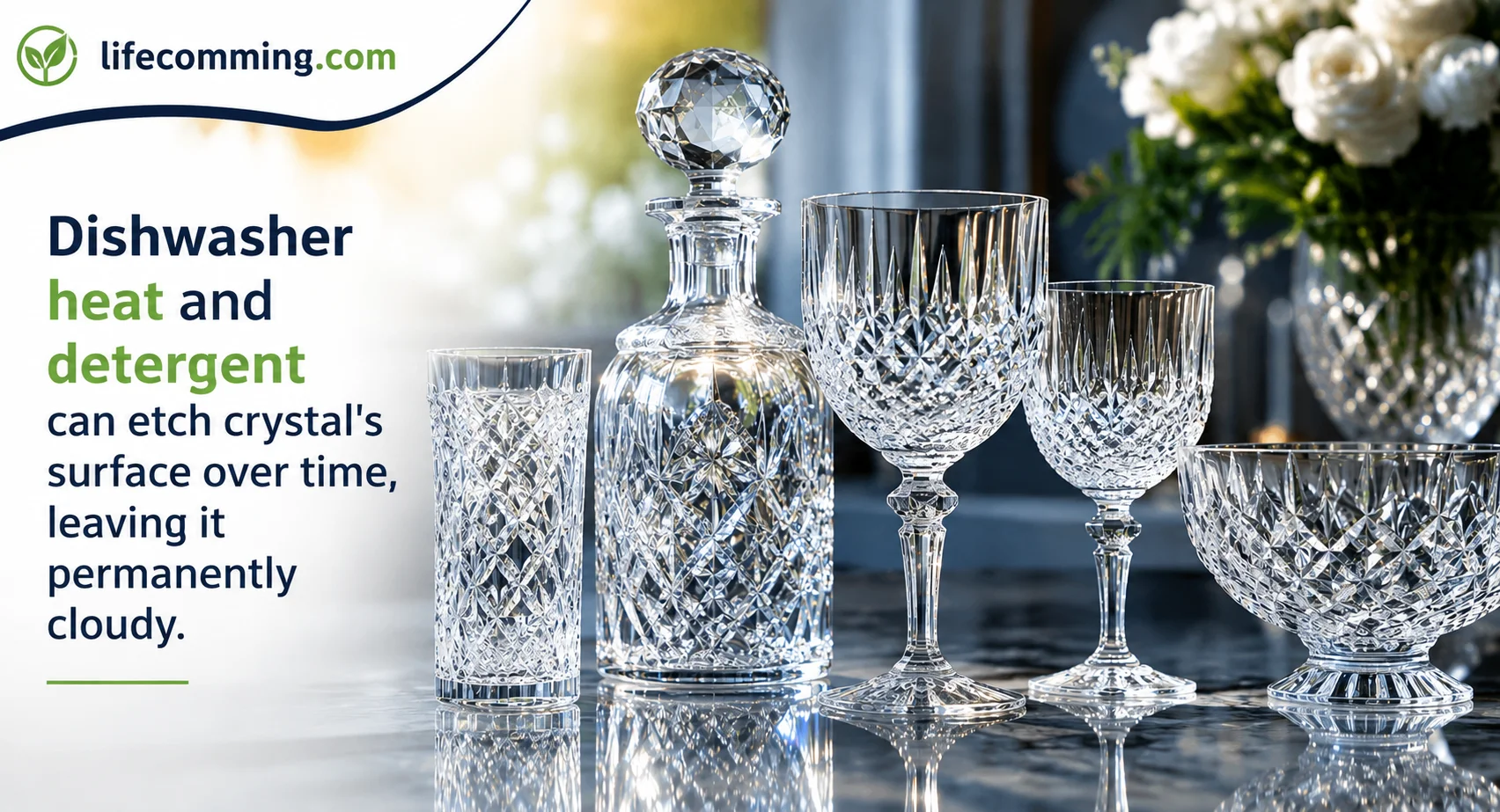
- Hand wash only — Dishwasher heat and detergent can etch crystal’s surface over time, leaving it permanently cloudy.
- Use warm, not hot, water — Sudden temperature changes can crack crystal, especially thin stemware.
- Add a splash of white vinegar — A vinegar-water rinse removes mineral spots and restores shine without abrasive scrubbing.
- Dry with a lint-free cloth — Air-drying often leaves water spots; a microfiber cloth prevents streaking.
- Store upright, not on the rim — Storing stemware upside down on its rim puts stress on the most fragile part of the glass.
- Avoid stacking — Crystal pieces can fuse slightly or chip if stacked directly on top of each other; use felt or cloth separators.
Cloudy crystal fix: If a piece has gone hazy from hard water buildup, soak it in a mix of equal parts white vinegar and warm water for 15–20 minutes, then gently hand wash and dry immediately.
Is Crystal Glass Safe to Use Every Day
This depends entirely on the type of crystal.
- Lead crystal — Generally considered safe for occasional use, but health agencies advise against storing acidic liquids (wine, juice, vinegar-based dressings) in lead crystal decanters for extended periods, since lead can leach into the liquid over time.
- Lead-free crystal — Safe for daily use and long-term liquid storage, since it doesn’t contain the lead that raises leaching concerns.
- Crystal glassware for children — Skip it. The fragility and weight make it a poor fit regardless of lead content.
Practical rule of thumb: Drink from crystal often, but don’t store wine or spirits in a lead crystal decanter for more than a few hours before serving.
How to Buy Crystal Glass: What Actually Matters
Price alone won’t tell you if you’re getting quality crystal. Here’s what to actually check when shopping:
- Percentage of metal oxide content — Reputable brands list this; look for at least 24% for full lead crystal, or check for lead-free certification.
- Country and brand reputation — Names like Waterford (Ireland), Baccarat (France), and Riedel (Austria) have centuries of quality control behind them, though plenty of smaller workshops produce excellent crystal too.
- Hand-cut vs. machine-pressed — Hand-cut pieces show slight asymmetry and deeper, more varied facets; machine-pressed pieces are more uniform but less prized by collectors.
- Weight-to-size ratio — Heavier pieces relative to their size generally indicate higher oxide content and better craftsmanship.
- Return policy — Crystal ships fragile. Buy from sellers with clear breakage and return policies, especially online.
FAQs:
Is crystal glass more expensive than regular glass?
Yes. Crystal costs more because of pricier raw materials, slower production methods, and, for hand-cut pieces, the skilled labor involved in cutting and polishing each item.
Can crystal glass go in the dishwasher?
Most manufacturers recommend against it. Dishwasher heat and harsh detergents can dull crystal’s finish and weaken thin stems over repeated washes.
Why does crystal glass sparkle more than regular glass?
The metal oxides in crystal increase its refractive index, meaning light bends more sharply as it passes through, which creates the sparkle and rainbow effect you see in cut crystal.
Is all crystal glass made with lead?
No. Modern crystal increasingly uses barium, zinc, or potassium oxide instead of lead, meeting the definition of crystal without the health concerns tied to lead content.
How can I tell if my crystal is valuable?
Check for a maker’s mark on the base, research the pattern name if there is one, and consider a professional appraisal for older or inherited pieces. Age and brand matter more than size for value.
Does crystal glass break more easily than regular glass?
It’s more prone to chipping and scratching due to its softer surface, but it isn’t necessarily weaker structurally thin stemware breaks easily regardless of whether it’s crystal or regular glass.
Final Thoughts:
Crystal glass earns its reputation honestly: the weight, the ring, the sparkle all come from real differences in materials and craftsmanship, not just clever marketing.
Knowing what separates it from regular glass means you’ll never overpay for glassware pretending to be crystal, and you’ll recognize genuine quality when you see it.
Next time you’re shopping for stemware or inherit a box of glassware from a relative, run the ring test first. It takes two seconds, and it tells you more than any label can.
About the Author