Laminated glass is a type of glass made by bonding two or more glass panes with one or more interlayers. The interlayer holds the glass together if it breaks.
Unlike ordinary glass, which can scatter into loose pieces after a major impact, laminated glass is designed to keep many broken fragments attached to the interlayer.
That makes it useful where safety, security, noise control, or protection from falling glass matters.
The interlayer is often made from polyvinyl butyral (PVB), but other materials can also be used, including ionoplasts, EVA, TPU, and specialized resin systems.
The exact combination affects the glass’s performance.
Glass + Interlayer + Glass
More complex designs can contain additional glass and interlayer layers for higher performance.
😊Why Does Laminated Glass Matter
Laminated glass can provide several benefits at the same time:
- Helps hold broken glass in place
- Reduces the risk of falling glass fragments
- Can improve security against forced entry
- Can reduce outdoor noise
- Can block a large amount of UV radiation
- Can be designed for certain hurricane and windstorm applications
- Can be used for overhead and architectural glazing
- Offers many design and appearance options
🤷♀️How Does Laminated Glass Work
The secret is the thin material between the glass panes.
During manufacturing, glass and an interlayer are bonded under controlled conditions. The finished unit behaves as a single laminated assembly. When an impact breaks one or more glass layers, the interlayer can help keep the fragments attached rather than allowing them to fall freely.
🥱What Happens When Laminated Glass Breaks
A simplified sequence looks like this:
- An object strikes the glass.
- The glass develops cracks.
- The glass may break under sufficient force.
- The interlayer remains attached to the glass fragments.
- Many fragments stay within the laminated assembly.
- The opening can remain partially covered instead of becoming an open hole.
This behavior is especially valuable in locations where broken glass could fall onto people below.
For example, laminated glazing is commonly considered for skylights, canopies, overhead glazing, curtain walls, windows, doors, balustrades, and other architectural applications.
Important:
Laminated glass can still break. It is not unbreakable or automatically bulletproof. Its performance depends on the complete glass construction, interlayer, thickness, framing, installation, and the standard or performance requirement being met.
😉What Are the Main Benefits of Laminated Glass
Laminated glass stands out because one product can solve several building problems.
Safety
The interlayer can help retain broken glass fragments and reduce the danger associated with loose shards.
This is one reason laminated glazing is used in applications where people could be exposed to falling or broken glass.
Security
Special laminated constructions can make forced entry more difficult. The glass may crack, but the interlayer can continue holding portions of the assembly together.
Higher-performance constructions can be designed for specific security requirements, including forced-entry, ballistic, blast, or other protective applications.
Noise Reduction
Standard windows can allow considerable outdoor sound into a building. Laminated glass with an appropriate acoustic interlayer can improve sound insulation.
This can be useful near:
- Busy
- Airports
- Railways
- Construction areas
- Urban streets
- Commercial buildings
- Schools
- Hotels
- Hospitals
Acoustic laminated glass is specifically engineered to improve sound reduction, rather than relying on ordinary laminated glass alone.
UV Protection
Many laminated glass systems can significantly reduce UV transmission. This can help protect interior furnishings, artwork, flooring, and other materials from UV-related fading.
For example, Guardian states that its PVB-based LamiGlass can absorb up to 99.5% of UV light, depending on the product configuration.
Design Flexibility
Laminated glass is not limited to plain clear windows.
Depending on the product, designers can specify different:
- Glass thicknesses
- Glass colors
- Interlayers
- Interlayer colors
- Transparency levels
- Acoustic properties
- Security performance
- Solar-control combinations
This makes laminated glass suitable for both practical and decorative projects.
What Are the Different Types of Laminated Glass
There is no single laminated-glass specification that fits every project.
The right type depends on what the glass needs to accomplish.
Clear Laminated Glass
Clear laminated glass is the familiar transparent option.
It is often selected when the project needs safety or security benefits without significantly changing the appearance of the glass.
Common uses include:
- Residential windows
- Doors
- Storefronts
- Partitions
- Facades
- Balustrades
Acoustic Laminated Glass
Acoustic laminated glass uses a specialized interlayer designed to improve sound insulation.
It can be particularly useful when reducing traffic and urban noise is a priority. Some manufacturers offer acoustic laminated systems for homes, offices, hotels, hospitals, airports, and other buildings.
Colored Laminated Glass
Colored interlayers can change the appearance of the glass while adding functional benefits.
They can be used for:
- Privacy
- Interior design
- Decorative walls
- Partitions
- Staircases
- Retail spaces
- Institutional buildings
Colored laminated products can combine visual design with safety, sound, and security objectives.
Security Laminated Glass
Security laminated glass uses specially selected glass and interlayers to provide greater resistance to intentional impact or forced entry.
The exact construction should be selected according to the required performance level. A generic laminated glass product should not automatically be described as “security glass.”
Hurricane-Resistant Laminated Glass
In areas exposed to hurricanes and severe windstorms, laminated glazing can be incorporated into systems designed to resist specific wind and impact requirements.
The glass alone is not the entire system. Framing, anchorage, installation, and tested assembly performance also matter.
Bullet-Resistant or Ballistic Laminated Glass
Special laminated constructions can be engineered for ballistic protection.
These systems are considerably different from ordinary residential laminated windows and should be specified according to a recognized test or performance requirement.
Blast-Resistant Laminated Glass
Special laminated glazing can also be used in blast-mitigation designs.
The goal is not simply to make glass harder to break. The complete glazing system is engineered to manage glass breakage and reduce hazardous fragments.
Laminated Glass vs. Tempered Glass: What’s the Difference
This is one of the most important questions when choosing safety glazing.
Both can be used as safety glass, but they behave differently when they break.
| Feature | Laminated Glass | Tempered Glass |
|---|---|---|
| Construction | Multiple glass layers with an interlayer | One glass lite that has been heat-treated |
| Breakage behavior | Fragments tend to remain attached to the interlayer | Breaks into many smaller pieces |
| Post-breakage retention | Strong advantage | Limited once broken |
| Security potential | Can be designed for enhanced security | Not normally a security solution by itself |
| Acoustic options | Excellent specialized options | More limited |
| UV protection | Often excellent with suitable interlayer | Depends on the overall glazing |
| Overhead glazing | Often useful | Application-dependent |
| Forced-entry resistance | Can be engineered for it | Generally not its main purpose |
The key distinction is retention.
Tempered glass is designed to break into smaller pieces. Laminated glass is designed so the interlayer can help hold broken pieces together.
The two technologies can also be combined. Heat-strengthened or tempered glass can be used as part of a laminated construction when the project requires additional performance.
Where Is Laminated Glass Used
Laminated glass appears in more places than many people realize.
Homes
Homeowners may use laminated glass for:
- Windows
- Patio doors
- Entry doors
- Skylights
- Balcony glazing
- Interior partitions
- Shower and specialty glazing where appropriate
- Areas where outside noise is a concern
For a home near a busy road, acoustic laminated glass can be particularly attractive because it combines glazing safety with sound-control potential.
Commercial Buildings
Commercial applications include:
- Storefronts
- Curtain walls
- Office windows
- Glass doors
- Lobby partitions
- Balustrades
- Canopies
- Facades
High-Rise Buildings
Laminated glazing can be useful in high-rise architecture because broken glass can become a falling-object hazard.
The ability of the interlayer to retain fragments is especially relevant to certain high-rise and overhead applications.
Skylights and Overhead Glazing
Overhead glass deserves special attention.
If ordinary glass breaks above people, loose fragments can fall downward. Laminated construction can help keep broken glass associated with the assembly.
This is one reason laminated glazing is widely considered for skylights, canopies, and other overhead applications.
Schools and Public Buildings
Safety, security, noise, and daylight can all influence glazing decisions in schools and public buildings.
Special laminated constructions can also be incorporated into security-focused glazing systems.
Museums and Art Galleries
UV protection can be valuable when protecting artwork and furnishings from UV exposure.
Laminated glass can also provide acoustic, safety, and design benefits, making it useful in museums and galleries.
Aquariums and Specialty Architecture
Laminated glazing is also used in specialty architectural applications, including certain aquariums and unusual glass structures.
Is Laminated Glass Stronger Than Regular Glass
It depends on what “stronger” means.
Laminated glass is not automatically stronger in every sense.
Its major advantage is performance after breakage.
Ordinary annealed glass can break and release loose, sharp fragments. Laminated glass can retain many fragments on its interlayer.
A laminated assembly can also be built with:
- Thicker glass
- Heat-strengthened glass
- Tempered glass
- Multiple interlayers
- Specialized security interlayers
- Acoustic interlayers
This allows manufacturers and designers to create assemblies for different performance goals.
Is Laminated Glass Safe
Laminated glass can provide important safety benefits, but “safe” does not mean “impossible to break.”
A properly selected laminated safety-glazing product can reduce the risk associated with glass breakage by helping retain fragments.
In the United States, architectural glazing is subject to applicable safety requirements, including federal requirements for certain products covered by 16 CFR Part 1201. The U.S. Consumer Product Safety Commission has also incorporated testing procedures based on ANSI Z97.1 for covered architectural glazing products.
Whether a particular piece of glass qualifies for a required safety-glazing application depends on the product, configuration, testing, location, and applicable building code.
Always verify the requirements for the specific project and jurisdiction.
Does Laminated Glass Reduce Noise
Yes, specially designed laminated glass can reduce sound transmission.
The interlayer can damp certain vibrations, which can improve acoustic performance compared with some conventional glass configurations.
This can make a difference in buildings exposed to:
- Road traffic
- Aircraft
- Trains
- City noise
- Construction
- Commercial activity
However, installing laminated glass does not mean a room becomes completely silent.
The result depends on the entire window or facade system, including:
- Glass thickness
- Number of panes
- Air-space width
- Interlayer type
- Frame design
- Seals
- Wall construction
- Installation quality
For exterior noise, manufacturers may report metrics such as OITC, while STC is commonly used for interior sound transmission applications.
Does Laminated Glass Block UV Rays
Many laminated glass products provide substantial UV protection because of their interlayers.
This can help reduce UV exposure to:
- Furniture
- Carpets
- Wood finishes
- Artwork
- Fabrics
- Displays
- Interior decorations
UV protection is particularly useful in buildings with large areas of glass and valuable interior contents.
But remember: UV protection and heat conol are not the same thing.
A glass product can reduce UV transmission without providing the level of solar-heat control needed for a particular building.
For solar performance, laminated glass can sometimes be combined with coated glass technologies to address additional thermal and solar-control goals.
What Are the Disadvantages of Laminated Glass
Laminated glass offers many advantages, but it is not the perfect choice for every project.
Higher Cost
Laminated glass generally costs more than basic single-pane glass because it involves additional materials and manufacturing.
Special acoustic, security, or high-performance constructions can cost considerably more.
Greater Weight
Multiple glass layers add weight.
This can affect:
- Frames
- Hinges
- Hardware
- Transportation
- Installation
- Structural calculations
More Complex Fabrication
Laminated glass requires specialized manufacturing and processing.
Cutting, drilling, edge work, and fabrication should be performed using methods appropriate for the specific laminated construction.
Replacement Can Be More Expensive
If a laminated unit becomes damaged, replacing it may cost more than replacing ordinary glass.
The replacement must also match the required thickness, interlayer, dimensions, and performance.
Not Automatically Bulletproof
Standard laminated glass should never be assumed to be bullet-resistant.
Ballistic protection requires a specially engineered and tested construction.
Not Automatically Hurricane-Rated
Simply choosing laminated glass does not make a window hurricane-resistant.
The entire assembly must meet the relevant requirements for the project.
How Much Does Laminated Glass Cost
There is no single price for laminated glass.
The final cost depends on the specification and installation.
Factors include:
- Glass thickness
- Number of glass layers
- Interlayer type
- Interlayer thickness
- Glass size
- Color
- Acoustic requirements
- Security requirements
- Low-E or solar-control coatings
- Edge processing
- Frame system
- Quantity
- Transportation
- Installation
- Local labor costs
- Building-code requirements
A basic clear laminated product may be much less expensive than a specialized acoustic, security, hurricane, ballistic, or blast-resistant system.
For a real project, request a quote based on the complete glazing specification, rather than asking only for a price per square foot.
How Do You Choose the Right Laminated Glass
Choosing laminated glass should begin with the problem you are trying to solve.
For Basic Safety
Look for a laminated safety-glazing configuration that meets the applicable standard and building-code requirements.
For Noise Reduction
Ask for an acoustic laminated glass configuration and request its tested acoustic ratings.
For Security
Tell the supplier exactly what threat you are trying to address.
“Security glass” can mean very different things, from delayed forced entry to ballistic protection.
For Hurricane Areas
Specify the applicable wind, impact, and building-code requirements.
Do not select the glass independently of the frame and installation system.
For Skylights
Ask about the requirements for overhead glazing and how the complete assembly behaves after breakage.
For UV Protection
Ask the manufacturer for the actual UV-transmission performance of the proposed glass rather than assuming every laminated product performs identically.
For Energy Efficiency
Consider laminated glass together with:
- Low-E coatings
- Solar heat gain
- Visible light transmission
- Insulating glass units
- Frame performance
- Building orientation
A good glass choice is always a system decision, not just a glass decision.
What Should You Ask a Glass Supplier
Before ordering laminated glass, ask these practical questions:
- What is the complete glass makeup?
- What interlayer is being used?
- What is the total thickness?
- Does it meet the required safety-glazing standard?
- What impact rating does it have?
- Is it suitable for the intended location?
- What acoustic rating does it provide?
- What is its UV-transmission performance?
- Is it suitable for overhead glazing?
- Is it designed for security applications?
- Does the complete assembly meet local code?
- What frame and installation method are required?
- Is the glass available in the required size?
- What warranty applies?
- Can the supplier provide technical documentation?
These questions can prevent an expensive mistake: ordering a glass product that looks right but does not meet the project’s actual performance requirements.
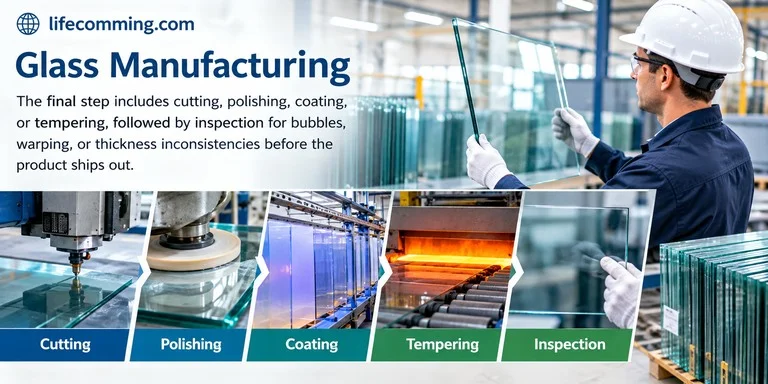
How Is Laminated Glass Made
Although the exact process varies by manufacturer and product, the basic idea is straightforward.
Glass Preparation
Glass sheets are cut and processed according to the required design.
Cleaning
The glass surfaces must be carefully prepared before lamination.
Interlayer Placement
The selected interlayer is placed between the glass layers.
Assembly
The glass and interlayer are assembled under controlled conditions.
Bonding
Heat, pressure, vacuum, or other controlled manufacturing methods are used to create a durable bond, depending on the lamination technology.
Quality Control
The finished product is checked for appearance and required performance characteristics.
Modern laminated glazing can use several types of interlayer systems, so manufacturing methods and final performance can vary considerably.
Laminated Glass Maintenance and Cleaning
Laminated glass generally can be cleaned like other architectural glass, but the cleaning method should match the manufacturer’s instructions.
For routine cleaning:
- Use a clean, soft cloth or suitable glass-cleaning equipment.
- Remove abrasive dirt carefully.
- Avoid scratching the surface.
- Follow the manufacturer’s cleaning recommendations.
- Pay attention to the frame, seals, and drainage paths.
- Inspect damaged glass promptly.
If you see cracks, edge damage, delamination, or other unusual defects, contact a qualified glazing professional.
Do not assume that a damaged laminated unit is safe simply because the glass remains attached to the interlayer.
What Is Delamination in Laminated Glass
Delamination occurs when the glass and interlayer lose adhesion or when the laminated assembly develops visible separation.
It can appear as:
- Cloudy areas
- Bubbles
- White edges
- Hazy sections
- Separation near the glass edge
The cause can vary. Moisture exposure, manufacturing issues, edge conditions, age, incompatible materials, or environmental stresses may contribute.
A small visual defect does not automatically mean the same thing in every product.
If delamination appears in installed laminated glass, have the unit assessed by the manufacturer, glazing contractor, or qualified professional.
Laminated Glass for Home Windows: Is It Worth It
For some homes, absolutely.
It can be particularly attractive when a homeowner wants more than basic glazing.
Consider laminated glass when you want a combination of:
- Improved safety
- Better fragment retention
- Noise reduction
- UV protection
- Enhanced security
- Specialty architectural performance
For example, a house beside a busy road might benefit from acoustic laminated glazing. A home with large overhead glass may prioritize fragment retention. A property in a security-sensitive location may require a specialized security laminate.
The best choice depends on the home’s location and goals.
Laminated Glass vs. Regular Glass: Which Should You Choose
If your only priority is the lowest upfront cost, ordinary glass may appear attractive.
But if the project involves safety, overhead glazing, noise, UV exposure, security, or severe-weather requirements, laminated glass can offer advantages that basic glass cannot.
A simple way to think about it:
- Regular glass: basic glazing for suitable applications
- Tempered glass: heat-treated glass designed to break into smaller pieces
- Laminated glass: glass with an interlayer designed to retain fragments
- Specialty laminated glass: engineered for acoustic, security, weather, ballistic, blast, or other performance goals
There is no universal “best glass.”
There is only the best glass for the application.
FAQs:
Is laminated glass stronger than tempered glass?
Not necessarily in every measure of strength. Their breakage behavior is different. Laminated glass uses an interlayer to retain fragments, while tempered glass is designed to break into many smaller pieces.
Does laminated glass break?
Yes. Laminated glass can break when exposed to sufficient force. Its interlayer helps hold many broken fragments together.
Is laminated glass bulletproof?
Ordinary laminated glass is not bulletproof. Ballistic protection requires specially designed and tested glazing.
Is laminated glass better than tempered glass?
Neither is automatically better. Laminated glass is often preferred when fragment retention, acoustic performance, UV protection, or security is important. Tempered glass is useful where thermal strength and small-fragment breakage are desired.
Can laminated glass be used in windows?
Yes. Laminated glass is widely used for residential and commercial windows, as well as doors, facades, partitions, and other applications.
Does laminated glass reduce outside noise?
Special acoustic laminated glass can reduce sound transmission. Performance depends on the complete glazing system and the specific acoustic interlayer.
Does laminated glass block UV?
Many laminated glass products provide substantial UV protection. The actual performance depends on the interlayer and complete glass specification.
Is laminated glass expensive?
It usually costs more than basic glass, but the price varies greatly with thickness, size, interlayer, performance requirements, fabrication, and installation.
Can laminated glass be used for skylights?
Yes, laminated glazing is commonly considered for skylights and other overhead applications because the interlayer can help retain broken glass. The complete assembly still needs to satisfy applicable requirements.
Does laminated glass provide security?
It can. Certain laminated constructions are specifically engineered for forced-entry resistance and other security applications. Standard laminated glass should not automatically be treated as security-rated glass.
Can laminated glass be colored?
Yes. Colored interlayers can create decorative and privacy effects while retaining the basic laminated-glass concept.
What is PVB in laminated glass?
PVB stands for polyvinyl butyral. It is one of the most common interlayer materials used between glass panes in laminated glazing.
How long does laminated glass last?
Its service life depends on the product, installation, environmental exposure, edge protection, manufacturing quality, and maintenance. Additionally, follow the manufacturer’s rated service conditions and warranty information.
Final Thoughts:
Laminated glass is much more than two pieces of glass stuck together.
Its real value comes from the interlayer and the way the complete glazing system performs when exposed to impact, sound, UV radiation, weather, or intentional attack.
For homeowners, architects, builders, and property owners, laminated glass can offer an impressive combination of:
- Safety
- Fragment retention
- Security options
- Noise control
- UV protection
- Design flexibility
- Specialty performance
But the smartest approach is not to choose laminated glass simply because it sounds safer.
Before buying, compare the complete glass makeup, interlayer, thickness, performance ratings, applicable codes, frame system, and installation requirements.
About the Author